Showing posts with label Poesía. Show all posts

La siguiente entrada comienza una serie de comentarios sobre la obra de Baudelaire: Las Flores del Mal. 

A pesar de que Charles Baudelaire es aclamado como uno de los más grandes poetas líricos del mundo, su relevancia en la historia literaria nace casi enteramente de un libro, un volumen de poemas llamado "Le Fleurs du Mal" (Las Flores del Mal). El libro fue un fracaso crítico y popular durante la vida del autor, principalmente porque aterró a mucha gente con su contenido —escritos de perversión sexual, corrupción moral así como enfermedad mental y física. Sin embargo, este libro introdujo temas así como una especie de contemplación propia que profundamente cambió la literatura, y en particular, la poesía del siglo XX. Para muchos críticos, Las Flores del Mal comenzó la transición del Alto Romanticismo a lo que ahora pensamos como poesía moderna. T. S. Eliot consideraba este volumen no sólo el principio del modernismo sino la joya de su corona; el poeta llamó a Las Flores del Mal "El más grande ejemplo de poesía moderna en cualquier idioma". En lo personal, Las Flores del Mal se ha vuelto una especie de biblia. Charles Baudelaire me acompaña cada noche a orar desde la magnificencia. Comparto el poema original y mis traducciones favoritas en inglés y español de este poema que a su vez traduce en palabras y explica una obsesión particular que poseo.

Obsession

Grands bois, vous m'effrayez comme des cathédrales;
Vous hurlez comme l'orgue; et dans nos coeurs maudits,
Chambres d'éternel deuil où vibrent de vieux râles,
Répondent les échos de vos De profundis.
Je te hais, Océan! tes bonds et tes tumultes,
Mon esprit les retrouve en lui; ce rire amer
De l'homme vaincu, plein de sanglots et d'insultes,
Je l'entends dans le rire énorme de la mer
Comme tu me plairais, ô nuit! sans ces étoiles
Dont la lumière parle un langage connu!
Car je cherche le vide, et le noir, et le nu!
Mais les ténèbres sont elles-mêmes des toiles
Où vivent, jaillissant de mon oeil par milliers,
Des êtres disparus aux regards familiers.

— Charles Baudelaire

Obsession

You forests, like cathedrals, are my dread:
You roar like organs. Our curst hearts, like cells
Where death forever rattles on the bed,
Echo your de Profundis as it swells.
My spirit hates you, Ocean! sees, and loathes
Its tumults in your own. Of men defeated
The bitter laugh, that's full of sobs and oaths,
Is in your own tremendously repeated.
How you would please me, Night! without your stars
Which speak a foreign dialect, that jars
On one who seeks the void, the black, the bare.
Yet even your darkest shade a canvas forms
Whereon my eye must multiply in swarms
Familiar looks of shapes no longer there.

— Roy Campbell, Poems of Baudelaire (New York: Pantheon Books, 1952)

Obsesión

Grandes bosques, me asustáis como las catedrales;
aulláis como un órgano; y en nuestros corazones malditos,
cámaras de eterno duelo donde vibran antiguos estertores,
responden los ecos de vuestro De Profundis.

¡Te odio, Oceano!, tus saltos y tus tumultos,
mi espíritu los descubre en él; esa risa amarga
del hombre vencido, llena de sollozos y de insultos,
yo la oigo en la risa enorme del mar.

¡Cómo me gustarías, oh noche, sin esas estrellas
cuya luz habla un lenguaje conocido!
¡pues yo busco lo caído, lo negro y lo desnudo!;

pero las tinieblas son lienzos
donde viven, saltando de mis ojos a millares,
seres desaparecidos de miradas familiares.


Quisiera compartir con ustedes el ensayo que da nombre al libro "Cómo leer la poesía: Ensayos sobre literatura y arte" de Hanni Ossott publicado por la Editorial bid & co. para su Colección Intramuros de la serie literaria. Adquirí este libro siguiendo la sugerencia de alguien cuya opinión valoro y respeto. Sin embargo, lo compré con recelo. Me esperaba un libro sobre métodos de valoración uniformes, disponible para cualquier lector y en el que encaja cualquier autor, sobre teorías estéticas o sobre críticas objetivas. Éste libro contiene nada de eso. Pocas veces un ensayo ha resonado tanto conmigo como éste. La mayoría de los ensayos de este libro son breves. Cada uno trata de muchos temas diversos y diferentes: desde las esculturas de Gego, el amor, la enfermedad, la muerte y la noche. Para mí, leer este libro, fue como leer un cuaderno de anotaciones de la autora, lleno de espacios de reflexión, o espacios para decir lo mismo, como ella titula otros de sus libros.

Cómo leer la poesía

Y la estrella viaja con sus piernas de fuente pura

HENRY CORBIN

Hace muchos años vi en una revista la cita de un verso de Henri Corbin. En ese momento quedé maravillada y su nombre fue guardado por mí en mi cerebro. Unas semanas atrás mi amigo Alberto Conte me enseñó una traducción de Corbin realizada por Juan Calzadilla y Eugéne Modestine. Sela compré, secretamente emocionada, porque sabía cuán difícil es entrar en contacto con un libro bueno hoy. Desde hace siete dáis ando con el libro Lejos como un viaje. Si acaso he podido leer siete poemas. Uno por noche. Leo los poemas en alta voz, los transcribo en mi cuaderno como cualquier Pierre Menard, se los leo a mis amigas por teléfono. Corbin me tiene emocionada. No sé cómo es él. Sé que es martiniqueño. No me imagino qué pueda ser la isla de Martinica, ni lo que se come allá. Me basta la palabra del poeta. Ahora tengo con quien orar de noche desde la magnificencia.
Me gusta descubrir un poeta. Es tan difícil penetrar en un mundo poético particular que cuando esto sucede resulta un acontecimiento. Una de las cosas más arduas es enseñar a leer poesía y yo lo realizo.La poesía le llega a uno como llega el amor o la fiebre. Por no se sabe qué razones. A veces podemos leer reiteradamente a un poeta y todavía no nos llega. Y es que no estamos preparados para él. La poesía tiene una duración, un tiempo, un cuajar en nuestra alma que nada tienen que ver con nuestras decisiones.
El lector de poesía debe ser ante todo un lector humilde, pasivo, receptor de riqueza. Por una rara conjunción, el lector tiene que tener la edad del poeta; no la edad cronológica, sino la edad mental, anímica, psíquica.
Hace ventitrés años conocí a Rilke. Fascinada por él quise hacer mi trabajo de grado sobre su obra, pero no pude. Había en ese entonces ciertas imágenes que no comprendía. Pero no lo abandoné, seguí leyéndolo, con fervor, pasivamente, escuchando... Veinte años después pude escribrir diez cuartillas sobre las Elegías de Duino que constituyen ahora el prólogo a mi traducción. Esto no me desanima. Durante veinte años me ha acompañado un poeta, no cinco poetas, sino uno. También me acompañan dos o tres novelitas. No más. Virginia Woolf, Thomas Mann, Hermann Broch... No son demasiados los libros que uno necesita para volverse sabio.
Ahora tengo un poeta nuevo que me durará probablemente ventitrés años para comprenderlo. Estoy feliz. Esto queire decir que a los sesenta y cinco años podré escribir algo sobre él, si es posible.
Ante mí hay dos versos de Corbin y me fascinan, pero no puedo decir exactamente qué significan, así como no puedo explicar lo que sea un beso:

Y los pájaros al desprenderse como hojas cortan
la cabeza del cazador en la noche

Leer poesía no es lo mismo que leer novelas o leer el periódico. Cuando leo poesía me encierro en mi cuarto para que no me vean, porque allí hago muecas, danzo, ondulo, leo en alta voz, me contorsiono como Ulises ante las sirenas, me acuesto en el piso, lloro, es decir, me conecto con lo más profundo del inconsciente. Y eso no se le puede mostrar a nadie, para ello —como dice Virginia Woolf— es preciso un cuarto propio. No le aconsejo a mis alumnos, por ejemplo, que lean poesía en un carrito por puesto. Porque la poesía es un templo y a ella se va con una vestidura especial y adecuada. Un velo.
Si a mí se me pidise un buen consejo sobre cómo leer la poesía diría que ante todo hay que querer leerla. Querer como querencia. Sin mala fe, sin desesperación. Averiguando qué diablos quiso decir el poeta. Porque los poetas son difíciles de leer. Uno puede quedarse ventitrés años con una frase incomprensible y alegrarse por ella... porque en el fondo casi la comprende. Y así uno manda la razón y la conciencia a paseo. Cada quien sostiene a un poeta.

Penélope
Cosido los ojos
La luna y el atrio
Tienen por chorro de agua
A la esposa.

HENRI CORBIN

Hannit Ossott (1946-2002) Nacio en Caracas, estudió en la Universidad Central de Venezuela, donde también trabajo como profesora de la Escuela de Letras. Recibió en 1972 el Premio José Antonio Ramos Sucre por su libro Formas en el sueño figuran infinitos, así como el Premio Lazo Martí y el Premio Conac de peosía, además trabajó como traductora y crítica.


"Nicholas was" older than sin, and his beard could grow no whiter. He wanted to die.

The dwarfish natives of the Arctic caverns did not speak his language, but conversed in their own, twittering tongue, conducted incomprehensible rituals, when they were not actually working in the factories.

Once every year they forced him, sobbing and protesting, into Endless Night. During the journey he would stand near every child in the world, leave one of the dwarves' invisible gifts by its bedside. The children slept, frozen into time.

He envied Prometheus and Loki, Sisyphus and Judas. His punishment was harsher.


Ho.

Ho.

Ho.


Cien Sonetos de Amor ~ XVII
Pablo Neruda

No te amo como si fueras rosa de sal, topacio
o flecha de claveles que propagan el fuego:
te amo como se aman ciertas cosas oscuras,
secretamente, entre la sombra y el alma.

Te amo como la planta que no florece y lleva
dentro de sí, escondida, la luz de aquellas flores,
y gracias a tu amor vive oscuro en mi cuerpo
el apretado aroma que ascendió de la tierra.

Te amo sin saber cómo, ni cuándo, ni de dónde,
te amo directamente sin problemas ni orgullo:
así te amo porque no sé amar de otra manera,
sino así de este modo en que no soy ni eres,
tan cerca que tu mano sobre mi pecho es mía,
tan cerca que se cierran tus ojos con mi sueño.


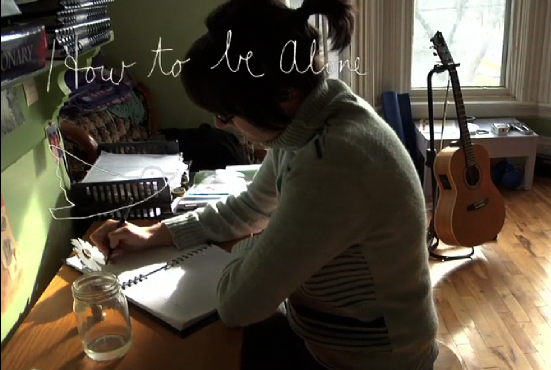
If you are at first lonely, be patient. If you've not been alone much, or if when you were, you weren't okay with it, then just wait. You'll find it's fine to be alone once you're embracing it.

We could start with the acceptable places, the bathroom, the coffee shop, the library. Where you can stall and read the paper, where you can get your caffeine fix and sit and stay there. Where you can browse the stacks and smell the books. You're not supposed to talk much anyway so it's safe there.

There's also the gym. If you're shy you could hang out with yourself in mirrors, you could put headphones in (guitar stroke).

And there's public transportation, because we all gotta go places.

And there's prayer and meditation. No one will think less if you're hanging with your breath seeking peace and salvation.

Start simple. Things you may have previously (electric guitar plucking) based on your avoid being alone principals.

The lunch counter. Where you will be surrounded by chow-downers. Employees who only have an hour and their spouses work across town and so they -- like you -- will be alone.

Resist the urge to hang out with your cell phone.

When you are comfortable with eat lunch and run, take yourself out for dinner. A restaurant with linen and silverware. You're no less intriguing a person when you're eating solo dessert to cleaning the whipped cream from the dish with your finger. In fact some people at full tables will wish they were where you were.

Go to the movies. Where it is dark and soothing. Alone in your seat amidst a fleeting community.
And then, take yourself out dancing to a club where no one knows you. Stand on the outside of the floor till the lights convince you more and more and the music shows you. Dance like no one's watching...because, they're probably not. And, if they are, assume it is with best of human intentions. The way bodies move genuinely to beats is, after all, gorgeous and affecting. Dance until you're sweating, and beads of perspiration remind you of life's best things, down your back like a brook of blessings.

Go to the woods alone, and the trees and squirrels will watch for you.
Go to an unfamiliar city, roam the streets, there're always statues to talk to and benches made for sitting give strangers a shared existence if only for a minute and these moments can be so uplifting and the conversations you get in by sitting alone on benches might've never happened had you not been there by yourself

Society is afraid of alonedom, like lonely hearts are wasting away in basements, like people must have problems if, after a while, nobody is dating them. but lonely is a freedom that breaths easy and weightless and lonely is healing if you make it.

You could stand, swathed by groups and mobs or hold hands with your partner, look both further and farther for the endless quest for company. But no one's in your head and by the time you translate your thoughts, some essence of them may be lost or perhaps it is just kept.

Perhaps in the interest of loving oneself, perhaps all those sappy slogans from preschool over to high school's groaning were tokens for holding the lonely at bay. Cuz if you're happy in your head than solitude is blessed and alone is okay.

It's okay if no one believes like you. All experience is unique, no one has the same synapses, can't think like you, for this be releived, keeps things interesting lifes magic things in reach.

And it doesn't mean you're not connected, that communitie's not present, just take the perspective you get from being one person in one head and feel the effects of it. take silence and respect it. if you have an art that needs a practice, stop neglecting it. if your family doesn't get you, or religious sect is not meant for you, don't obsess about it.

you could be in an instant surrounded if you needed it
If your heart is bleeding make the best of it
There is heat in freezing, be a testament.


A video by fiilmaker, Andrea Dorfman, and poet/singer/songwriter, Tanya Davis. 


Un poema sobre paternidad, malicia y miseria. 
Leído y citado en uno de mis libros favoritos por un hombre muy, muy malo.


This Be The Verse

They fuck you up, your mum and dad.
They may not mean to, but they do.
They fill you with the faults they had
And add some extra, just for you.

But they were fucked up in their turn
By fools in old-style hats and coats,
Who half the time were soppy-stern
And half at one another's throats.

Man hands on misery to man.
It deepens like a coastal shelf.
Get out as early as you can,
And don't have any kids yourself.


Si desean escuchar el poema leído por su propio autor, lo pueden encontrar, aquí.